The rooms behind the ticket
Hofburg halls and the Konzerthaus
The three halls behind the Hofburg concert ticket: the Ceremonial Hall, the Festival Hall and the Konzerthaus Mozart Hall, with dates and builders.
Reserve your seats in the Hofburg ↗Quick answer
The Hofburg concert uses halls in two buildings: the Hofburg palace, with its Ceremonial Hall of 1802 to 1806 and its Festival Hall finished in 1923, and the Konzerthaus, opened in 1913, whose Mozart Hall holds 704 seats. Your confirmation names the hall for your date.
A palace built in layers
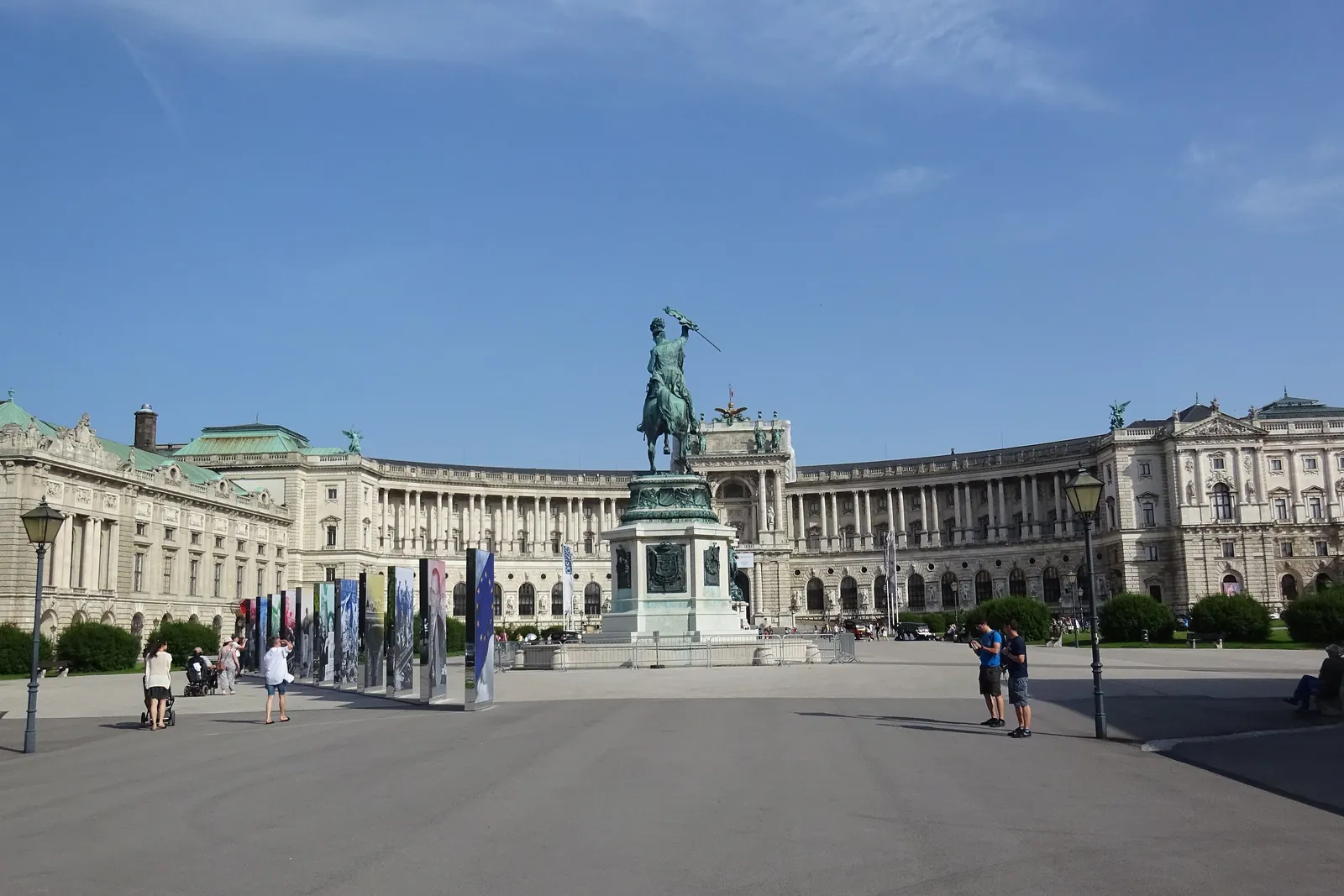
The oldest parts of the Hofburg date from the 13th century. It became the principal imperial palace of the Habsburg dynasty, and the seat of the Emperors of Austria until 1918. Since 1946 it has been the official residence and workplace of the president of Austria. The Neue Burg wing, built between 1881 and 1913, was the last major expansion. A concert here is held in a complex that grew over centuries, which is why its halls differ so much in age and in style.
The Ceremonial Hall
The Zeremoniensaal was built between 1802 and 1806 under Emperor Franz I by the court architect Ludwig Montoyer, in the classical style. The orchestra's pages recall that in 1810 Napoleon I chose the hall to court Archduchess Marie Louise, and that gala evenings such as the Ball at Court were held there under Franz Joseph I and Empress Elisabeth. It served as a throne room until the end of the monarchy in 1918. Today it holds 492 guests and is described as barrier-free and air-conditioned.
The Festival Hall
The Festsaal was designed as a new throne room, although Wikipedia notes that it was never used as one. Building began under Franz Joseph I in 1908, and the hall was completed in 1923. At almost 1,000 square metres it is the largest hall in the Hofburg. Its ceiling paintings by Schramm carry the motto Viribus Unitis, with united forces. The hall hosted the Eurovision Song Contest in 1967. The orchestra says it is usually not open to the public outside concerts, and it stages its Christmas concerts there, and its New Year's concert since 1980.
The Konzerthaus Mozart Hall
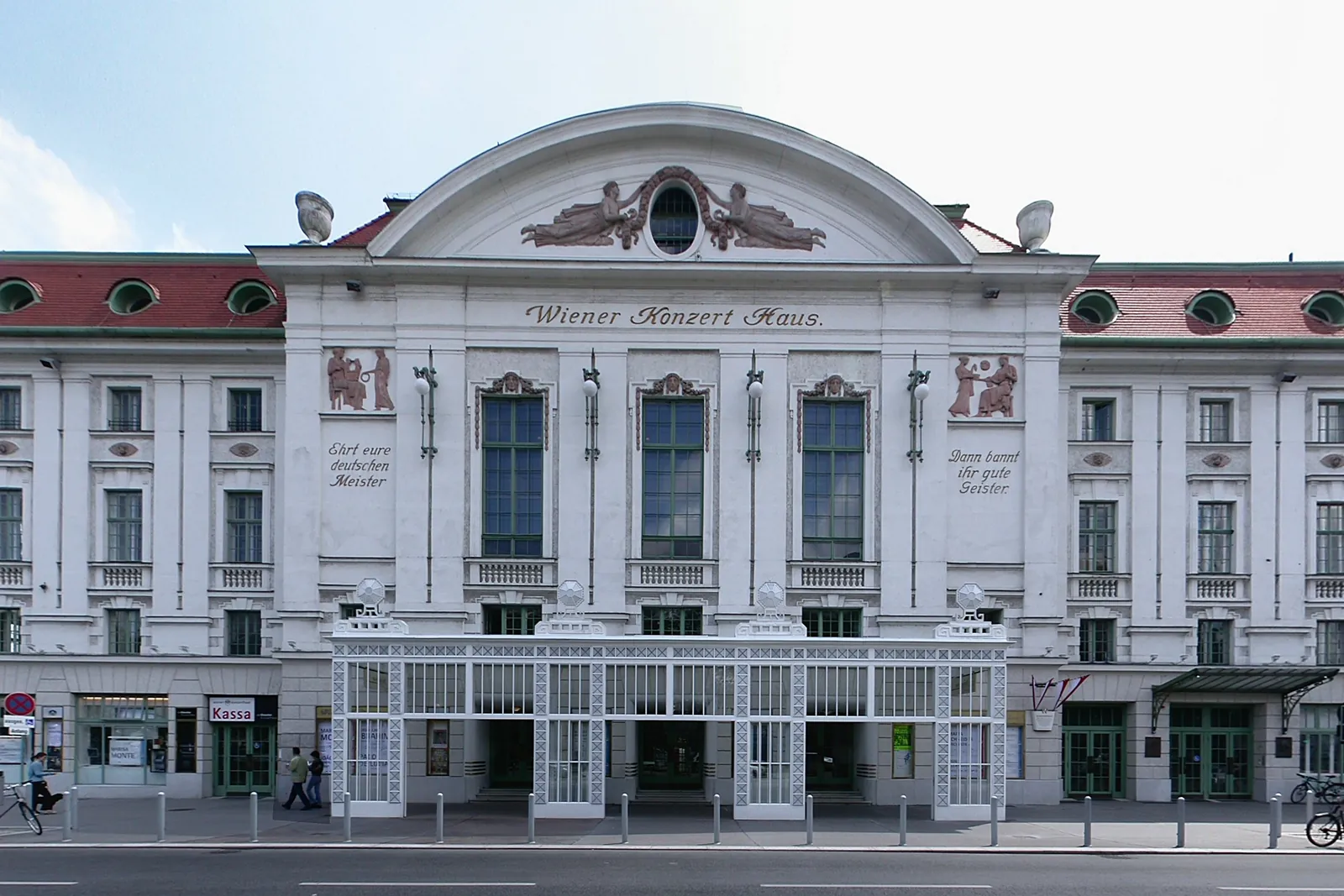
The Konzerthaus opened on 19 October 1913, with Richard Strauss's Festival Prelude and Beethoven's Ninth Symphony. Ludwig Baumann, Ferdinand Fellner and Hermann Helmer designed it so that its three large halls could stage concerts at the same time without disturbing one another. The Mozart Hall is the second largest of them, with 704 seats divided between ground floor and balcony. The orchestra says it has a worldwide reputation for its acoustics. The building was reconstructed between 1998 and 2001.
What to look at in the Festival Hall
Look up. The ceiling paintings by Schramm carry the motto Viribus Unitis, with united forces, and show Austria enthroned. Around the hall, fifteen lunettes by Veith show Habsburg rulers, and octagonal fields by Stauffer depict figures including Prince Eugene of Savoy and Prince Metternich. These are the orchestra's own descriptions of the hall. The hall is lit for the stage in the evening, so the paintings are easier to see before the lights go down or between pieces, which is one more reason to arrive early.
Why your hall matters
The hall shapes the evening more than the programme does. In a palace hall you sit under chandeliers in a room made for state occasions, with the orchestra on a platform a few steps above the floor. At the Konzerthaus you sit in a purpose-built concert house with a balcony. The orchestra, the soloists and the style of programme stay the same. If the palace is what you came for, read the hall name in your confirmation straight after booking, while a change of date is still easy.
Who this isn't for
This is a ticket to a concert, not to the building. If you want to see the Hofburg's state rooms by daylight, the palace's museums keep their own hours and sell their own tickets. The Festival Hall is usually closed to the public outside concerts, so the ticket is one of the few ways into it, but you will see it in the evening, with the stage lit and the seats full. If you came for architecture alone, plan a visit to the museums and the library instead.
Frequently asked questions
Which hall will my concert be in?
Your confirmation names it. The orchestra's pages list the Ceremonial Hall, the Festival Hall and the Konzerthaus Mozart Hall.
How big is the Festival Hall?
The orchestra says almost 1,000 square metres, the largest hall in the Hofburg.
When did the Konzerthaus open?
On 19 October 1913. Its Mozart Hall has 704 seats.
Can I see the halls without a concert ticket?
The orchestra says the Festival Hall is usually not open to the public outside concerts. Check the palace for what it offers.
Sources